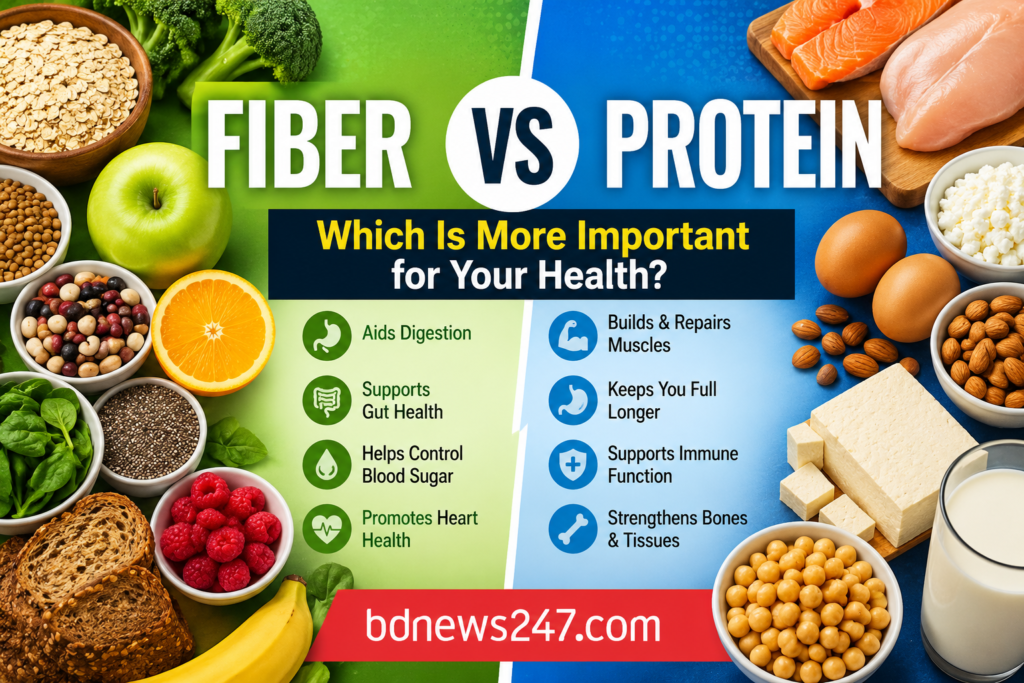
When it comes to healthy eating, two nutrients consistently dominate the conversation: fiber and protein. Both are essential for overall health, yet many people wonder whether one is more important than the other.
Protein is often praised for supporting muscle growth and keeping you full after meals. Fiber, on the other hand, is known for promoting digestive health, regulating blood sugar levels, and supporting heart health.
The truth is that fiber and protein serve different functions in the body. Rather than choosing one over the other, a balanced diet should include adequate amounts of both.
In this guide, we’ll explore the differences between fiber and protein, their unique health benefits, daily intake recommendations, and the best food sources to help you meet your nutritional goals.
What Is Fiber?
Fiber is a type of carbohydrate that the body cannot fully digest. Unlike other carbohydrates that are broken down into sugar for energy, fiber passes through the digestive system largely intact.
There are two main types of dietary fiber:
Soluble Fiber
Soluble fiber dissolves in water and forms a gel-like substance in the digestive tract. This type of fiber can help lower cholesterol levels and improve blood sugar control.
Common sources include:
* Oats
* Beans
* Lentils
* Apples
* Citrus fruits
* Chia seeds
Insoluble Fiber
Insoluble fiber does not dissolve in water. It adds bulk to stool and supports regular bowel movements.
Common sources include:
* Whole grains
* Brown rice
* Leafy greens
* Nuts
* Vegetables
* Fruit skins
What Is Protein?
Protein is one of the three primary macronutrients alongside carbohydrates and fats. It is made up of amino acids, which are often referred to as the building blocks of life.
The body uses protein to build, repair, and maintain tissues, including muscles, organs, skin, hair, and bones.
Protein also plays a vital role in:
* Hormone production
* Enzyme function
* Immune system support
* Cellular repair
* Energy production when needed
Because the body cannot store protein efficiently, it is important to consume protein-rich foods regularly throughout the day.
How Fiber Supports Your Health
Fiber offers a wide range of benefits that extend far beyond digestive health.
1. Improves Digestive Function
Fiber helps move food through the digestive tract and supports regular bowel movements. A diet rich in fiber may reduce the risk of constipation and other digestive issues.
2. Promotes Gut Health
Beneficial bacteria in the gut feed on fiber. A healthy gut microbiome has been linked to improved digestion, stronger immunity, and better overall health.
3. Helps Manage Weight
High-fiber foods tend to be more filling and take longer to digest. This can help reduce hunger and support healthy weight management.
4. Supports Blood Sugar Control
Fiber slows the absorption of sugar into the bloodstream, helping maintain stable blood glucose levels.
5. Supports Heart Health
Research suggests that higher fiber intake may help lower cholesterol levels and reduce the risk of cardiovascular disease.
6. May Reduce Disease Risk
Adequate fiber intake has been associated with a lower risk of several chronic conditions, including:
* Type 2 diabetes
* Heart disease
* Colorectal cancer
* Obesity
How Protein Supports Your Health
Protein is equally important and contributes to numerous functions throughout the body.
1. Builds and Preserves Muscle
Protein provides the amino acids necessary for muscle growth, recovery, and maintenance.
This becomes especially important for:
* Athletes
* Older adults
* People losing weight
* Individuals recovering from injury
2. Enhances Satiety
Protein is one of the most filling nutrients available. Meals rich in protein may help reduce cravings and prevent overeating.
3. Supports Healthy Aging
Maintaining muscle mass becomes increasingly important with age. Adequate protein intake can help preserve strength, mobility, and independence.
4. Strengthens the Immune System
Many immune cells rely on amino acids to function properly. Protein helps support the body’s natural defense system.
5. Supports Bone Health
Emerging research suggests that adequate protein intake may contribute to stronger bones and reduce the risk of age-related bone loss.
Fiber vs Protein: Which Is Better for Weight Loss?
Many people associate protein with weight loss because of its ability to increase fullness and preserve lean muscle mass.
However, fiber is also highly effective for weight management.
Protein helps by:
* Reducing appetite
* Increasing satiety
* Preserving muscle during calorie restriction
Fiber helps by:
* Slowing digestion
* Reducing hunger
* Supporting healthy blood sugar levels
For sustainable weight loss, combining both nutrients in meals is often the most effective approach.
Daily Fiber and Protein Recommendations
Fiber Intake
Current dietary guidelines recommend approximately:
* Women: 22–28 grams per day
* Men: 28–34 grams per day
Unfortunately, many Americans consume significantly less fiber than recommended.
Protein Intake
Protein needs vary based on age, activity level, and health goals.
General recommendations include:
* Minimum: 0.8 grams per kilogram of body weight
* Active adults: 1.2–1.6 grams per kilogram of body weight
Individuals who exercise regularly may require higher amounts to support muscle recovery and performance.
Best Sources of Fiber
If you’re looking to increase fiber intake, focus on whole, minimally processed foods.
Excellent sources include:
* Black beans
* Lentils
* Chickpeas
* Oats
* Apples
* Pears
* Berries
* Avocados
* Broccoli
* Brussels sprouts
* Spinach
* Brown rice
* Chia seeds
Best Sources of Protein
Both animal and plant-based foods can provide high-quality protein.
Animal Protein Sources
* Chicken breast
* Turkey
* Lean beef
* Fish
* Eggs
* Greek yogurt
* Cottage cheese
* Milk
Plant Protein Sources
* Tofu
* Tempeh
* Lentils
* Beans
* Chickpeas
* Edamame
* Nuts
* Seeds
* Soy milk
Foods That Provide Both Fiber and Protein
Some foods offer the best of both worlds.
Examples include:
* Lentils
* Black beans
* Chickpeas
* Edamame
* Chia seeds
* Hemp seeds
* Quinoa
* Oats
Including these foods regularly can help you meet both nutrient goals more easily.
Can You Eat Too Much Fiber or Protein?
While both nutrients are beneficial, excessive intake may cause issues.
Too much fiber may lead to:
* Bloating
* Gas
* Abdominal discomfort
* Digestive upset
Too much protein may contribute to:
* Digestive issues
* Increased intake of saturated fat if protein comes primarily from processed meats
* Potential kidney concerns for individuals with existing kidney disease
Gradually increasing fiber intake and maintaining a balanced diet can help avoid these problems.
The Bottom Line
The debate between fiber and protein often misses an important point: your body needs both.
Protein supports muscle maintenance, recovery, immune function, and healthy aging. Fiber promotes digestive health, heart health, blood sugar regulation, and long-term disease prevention.
Instead of prioritizing one nutrient over the other, focus on building meals that include both fiber-rich and protein-rich foods. This approach can help improve satiety, support weight management, and promote better overall health for years to come.